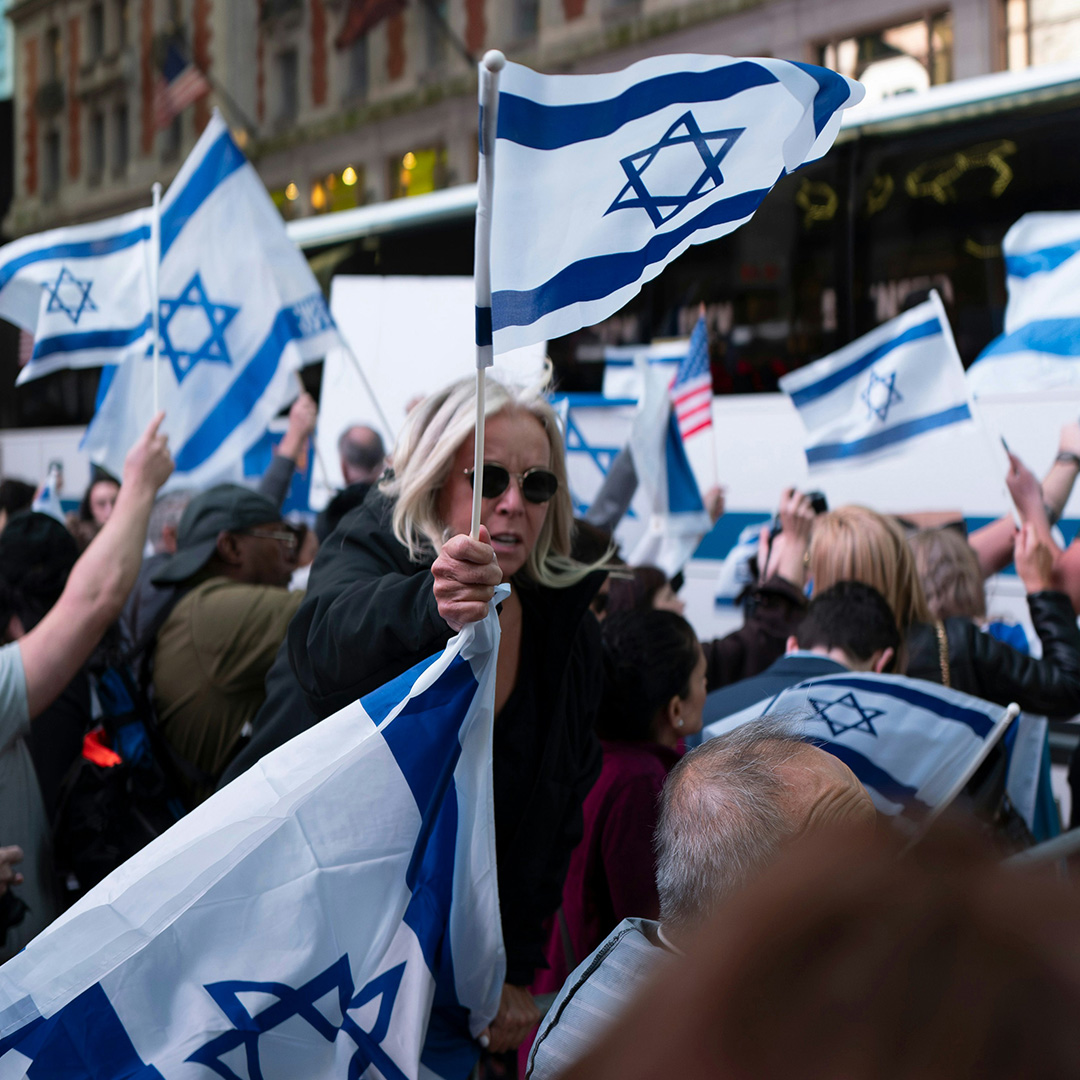
The Arab–Israeli conflict grew out of the political tension and military skirmishes between both sides. However, its more recent roots lie in the rise of Zionism and Arab nationalism in the latter half of the nineteenth century. The underlying reason for the conflict was based on the return of the Jewish people to their biblical homeland—a land also claimed by Palestinian Arabs. The culmination came in 1948 when the United Nations recognized the modern State of Israel. Open strife between the two sides began following the collapse of the Ottoman Empire after World War I, with questions of territorial rights shifting over the years from regional issues to more local Israeli–Palestinian concerns.
Various Muslim groups invoke religious arguments to support their uncompromising hatred for Israel and the Jewish people. The contemporary history of the Arab–Israeli conflict is unquestionably affected by those religious beliefs and the Arab desire to occupy all the territories deeded to Israel from the time of Abraham, Isaac, and Jacob. The Land of Canaan or Eretz Yisrael was, as outlined in both the Hebrew and Christian Bibles, promised by God to the Children of Israel. In his 1896 manifesto, The Jewish State, Theodor Herzl repeatedly refers to the biblical Promised Land concept. Out of 12 major political parties extant in Israel, Likud is currently the most prominent to include the biblical claim to the Land of Israel in its platform. Conversely, Muslims revere many sites in Israel, including the Cave of the Patriarchs and the Temple Mount.
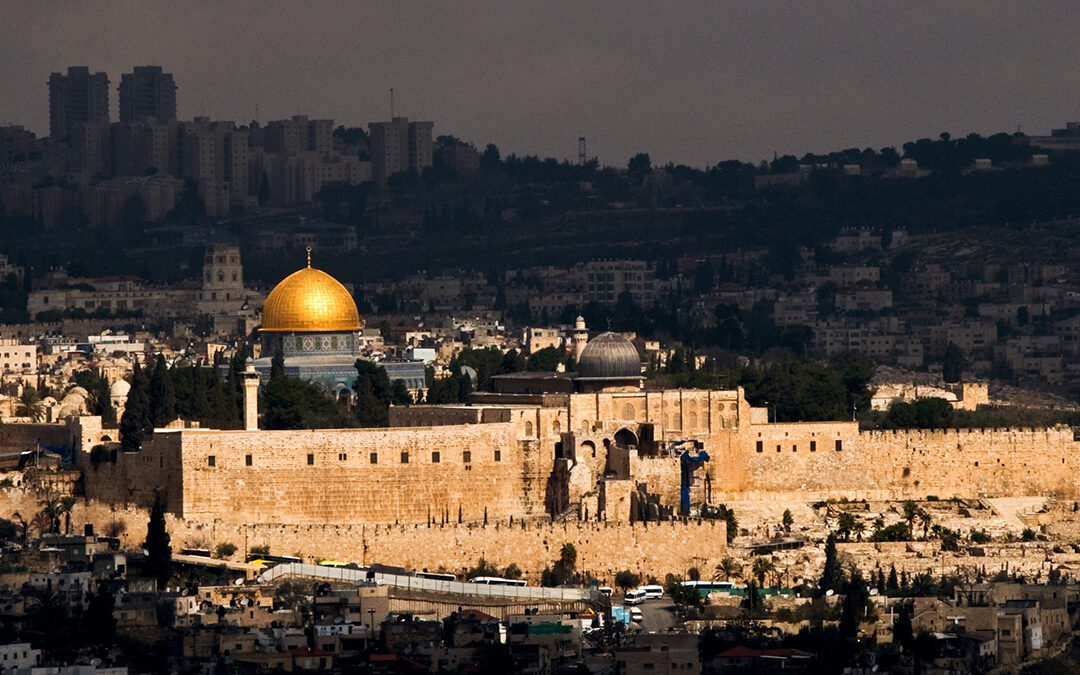
Over the past 14 centuries, Muslims have constructed Islamic landmarks on these ancient sites, such as the Dome of the Rock and the Al-Aqsa Mosque, a scant distance from the Western Wall, the holiest site in Judaism. This proximity has, as much as any thing, brought the two groups into sometimes open conflict over the rightful possession of Jerusalem. Muslim teaching proclaims that Muhammad passed through Jerusalem on his first journey to heaven. Hamas (the Palestinian Sunni Islamist organization), which governs the Gaza Strip, claims that all of the land of Palestine (the current Israeli and Palestinian territories) is an Islamic waqf, or indisputable religious legacy in Islamic law, that should only be governed by Muslims.
The Middle East, including Southern Syria (later Mandatory Palestine), was under the control of the Ottoman Empire for nearly 400 years. Near the end of the empire, the Ottomans began to exert their Turkish ethnic identity, leading to discrimination against the Arabs. Hopes of liberation from the Ottomans led many Jews and some Arabs to support the Allied Powers during World War I. In the late 19th century, European and Middle Eastern Jews increasingly immigrated to Southern Syria, purchasing land from the local Ottoman landlords. At that time, the city of Jerusalem did not extend beyond its protective walled area and contained a population of only a few tens of thousands.
During 1915–16, with World War I underway, the British High Commissioner in Egypt, Sir Henry McMahon, secretly communicated with Husayn ibn ‘Ali, patriarch of the Hashemite family, and with the Ottoman governor of Mecca and Medina. McMahon convinced Husayn to lead an Arab revolt against the Ottoman Empire, which was then aligned with Germany against Britain and France. McMahon assured Husayn that if the Arabs supported Britain in that endeavor, the British government would establish an independent Arab state under Hashemite rule in the Arab provinces of the Ottoman Empire, which included Palestine. 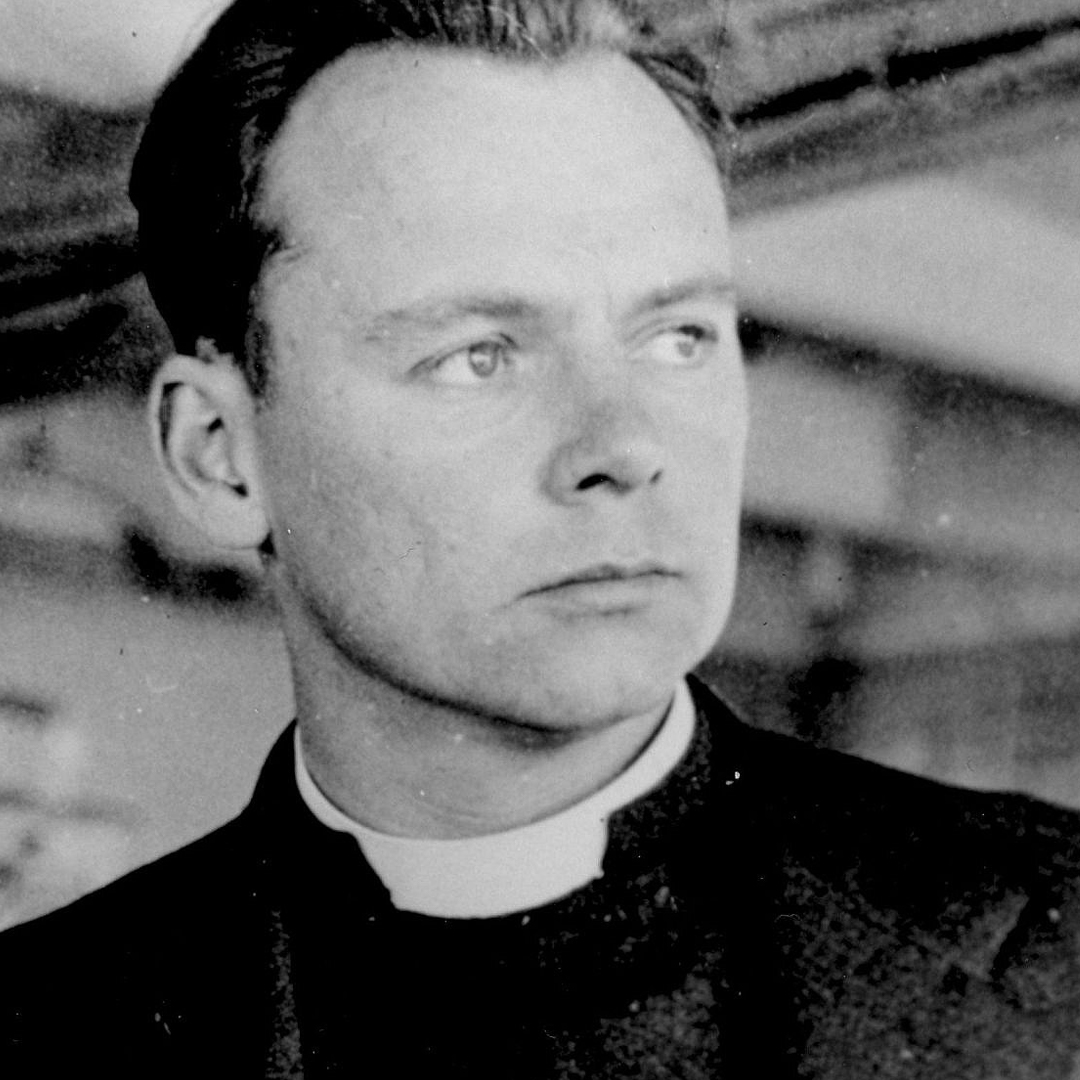
That revolt, led by T. E. Lawrence, better known as Lawrence of Arabia and Husayn’s son Faysal, successfully defeated the Ottomans, and Britain took control of much of the area. In 1917, Southern Syria had been conquered, and the British government issued the Balfour Declaration stating that Britain favorably viewed “the establishment in Palestine as a national home for the Jewish people,” but that “nothing shall be done which may prejudice the civil and religious rights of existing non-Jewish communities in Palestine.” The Declaration was issued due to the belief by Prime Minister David Lloyd George and other key members of the British government that Jewish support was essential to winning the war.
As one might imagine, the declaration was not received well in the Arab world. Following the war, the area remained under British rule and became known as the British Mandate of Palestine. It included what is today Israel, the land claimed by the Palestinian Authority, and the Gaza Strip. Transjordan was eventually designated a separate British protectorate—the Emirate of Transjordan, which gained autonomy in 1928, and today is known as the nation of Jordan.
Jewish immigration to Mandatory Palestine continued, but less documented immigration was occurring in the Arab sector, bringing workers from Syria and other neighboring areas. Palestinian Arabs saw this rapid influx of Jewish immigrants as a threat to their land and their identity as a people. Moreover, Jewish practices of purchasing land and prohibiting the employment of Arabs in Jewish-owned industries and farms were not well received in Palestinian Arab communities. Demonstrations protesting what the Arabs felt were unfair preferences for the Jewish immigrants set forth by the British mandate that governed Palestine proliferated.
By 1931, 17 percent of the population of Mandatory Palestine was Jewish, an increase of six percent since 1922. Immigration would soon peak after the Nazis rose to power in Germany, causing the Jewish population in British Palestine to double. In the mid-1930s, Izz ad-Din al-Qassam arrived from Syria and established the Black Hand, an anti-Zionist and anti-British militant organization. He recruited and arranged military training for peasants; by 1935, al-Qassam had enlisted several hundred men. The cells were equipped with bombs and firearms used to kill Jewish settlers in the area, as well as engaging in a campaign of vandalism aimed at Jewish settler plantations.
Escalating tensions led to the 1936–1939 Arab revolt in Palestine. In response to Arab pressure, British authorities greatly reduced the number of Jewish immigrants allowed into Palestine. Those restrictions remained until the end of the Mandate, a period which coincided with the Nazi Holocaust and attempts by Jewish refugees to escape Hitler’s Europe. Consequently, the majority of Jewish entrants to Palestine were considered to be illegal, further increasing tension. Following several failed efforts to solve the problem diplomatically, the British petitioned the newly formed United Nations for help. In May of 1947, the General Assembly appointed a United Nations Special Committee on Palestine (UNSCOP), composed of representatives from Australia, Canada, Czechoslovakia, Peru, Sweden, Guatemala, Yugoslavia, India, Iran, Netherlands, and Uruguay.
Christian Zionist John Stanley Grauel is credited in some circles with literally making Israel possible. You might recognize the name of the refugee ship SS Exodus, which was made famous by Exodus, the Leon Uris novel released in 1958. Uris had earlier covered the fighting in Israel as a war correspondent. His novel would become an international bestseller—the biggest since Margaret Mitchell’s blockbuster, Gone with the Wind. Director Otto Preminger turned the book into a movie in 1960, with the lead role going to Paul Newman.
Grauel was born in Worcester, Massachusetts, in 1917. In 1941, John bowed to his mother’s wishes and entered the Methodist Theological Seminary in Bangor, Maine. She would hold great sway over his education regarding the Jewish people and the path John would take in later life. During his last year at seminary, John met and married. Sadly, he lost both his wife and son in childbirth and never remarried. Shortly after graduation, John essentially became a circuit-riding preacher, as he was sent to pastor several small towns. However, his heart was soon captured by news of the war raging in Europe, and specifically by the suffering of the Jewish people under Hitler’s regime.
In 1944, at his first Zionist conference, John met David Ben-Gurion. From him, he learned of the Haganah, the Jewish underground army in Palestine. After returning home, Grauel soon noticed a steady stream of young men going in and out of an adjoining office. One day, his curiosity got the better of him, and he walked next door to introduce himself to the man in charge, Bucky Karmatz. Over a lunch of sandwiches at Karmatz’s desk, John discovered that the office was a recruiting station for Haganah. When the two men parted company, John recorded, “I knew I had found my niche. I would join Haganah…to become part of that organization to rescue those who could be helped to leave Europe. I liked that affirmation of life after the war.”
During Haganah meetings at the Hotel Fourteen in New York City, John rubbed elbows with the men and women who would be totally invested in the future of Israel: David Ben-Gurion, Golda Meir, Teddy Kollek, Nachum Goldman, Meyer Wisgal, and others of note who attended the meetings occasionally. At one session, John was informed that an ocean liner had been secured and would be outfitted to transport Jewish immigrants from Europe to the Holy Land. Grauel arrived at the docks in Baltimore expecting to see the luxurious SS President Garfield but was met instead by the derelict and rotting hulk of the SS Warfield. He was horrified at the thought of crossing the Atlantic in the old liner but was determined to fulfill his commitment.
He boarded the ship and later said: “By the grace of God and a touch of insanity, I passed from the world of Reverend John Stanley Grauel to John Grauel, ordinary seaman. There were thousands of leaks…it took the crew days of scrubbing, sanding, polishing, and mending just to make some order out of chaos.” On March 29, 1947, after a storm delay had set them back by a month, John and the crew set sail for Marseille aboard the ship renamed Exodus. He was there ostensibly as an undercover correspondent for the Churchman, an Episcopal journal. With that designation, he secured a visa from the British Consulate in Paris, enabling him to legally enter Palestine. His assignment was to make certain the world knew of the events surrounding the ship. The ship steamed toward Palestine with more than 4,550 refugees packed aboard.
Just as she neared Haifa on the Mediterranean coast, the ship was rammed by the British Royal Navy cruiser Ajax, in a convoy with five destroyers, and was boarded by sailors. This was not an easy task, as the SS Exodus had been fortified with barriers and barbed wire to discourage such actions. The British reportedly bombarded the ship with tear gas grenades to subdue the passengers. Captain Ike Aronowicz and his crew challenged the boarding party. One crew member, First Mate William Bernstein, a sailor from California, and two passengers were bludgeoned to death.
The ship that had brought such hope to so many had been attacked by the British navy a mere 17 miles offshore, in international waters. It was a wanton act of piracy for which the Royal Navy commanders were never charged. Grauel reported that, as the Exodus staggered into the port at Haifa, those still able to stand gathered on the deck of the ship and sang “Hatikvah,” the hymn of hope. Grauel, the only passenger onboard with a valid visa, was arrested but soon escaped with help from none other than the future mayor of Jerusalem, Teddy Kollek, and the Haganah.
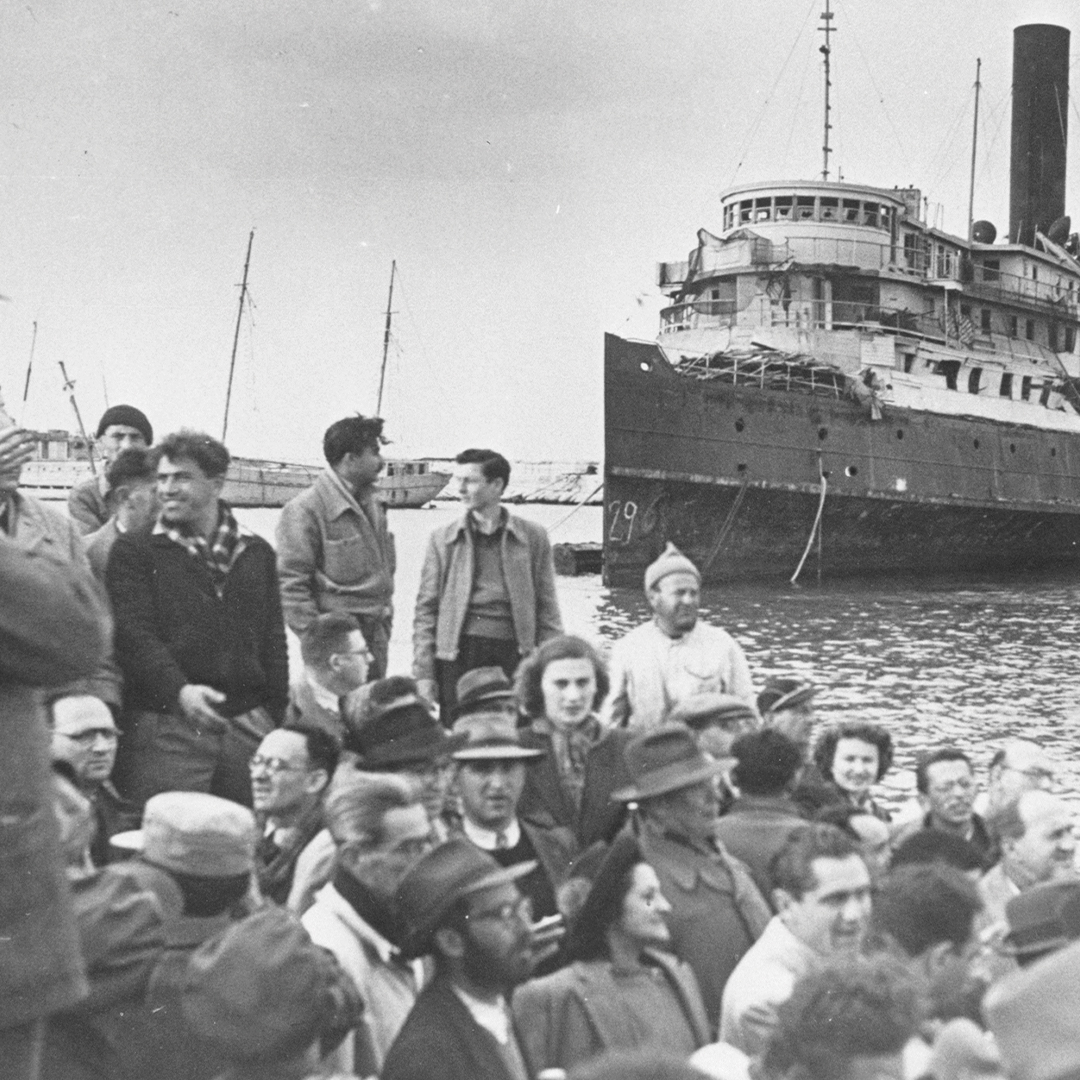 The Jews onboard the SS Exodus were then forced to disembark in Haifa and were eventually and unwillingly returned to British-controlled camps in Germany. Grauel was summoned to Kadima House in Jerusalem to give a firsthand account of his experiences during the voyage with the refugees to the United Nations Committee on Palestine. As he stood before that group, he leveled his heartfelt accusations regarding the treatment of the Jewish passengers on the SS Exodus. He later said of his testimony: “There was great gratification for me in knowing that my eyewitness report was now a matter of record. Inherent in the nature of the relationship between Christians and Jews was the fact that, because I was a Christian, in this situation, my testimony would be given greater credence than that of a Jewish crew member.”
Grauel’s witness proved to be an effective means of gaining compassion and support for the Jewish cause. His eloquent speech to the UNSCOP later earned him the moniker of “the man who helped make Israel possible.” Prime Minister Golda Meir believed it was Grauel’s recounting of the events surrounding the SS Exodus that persuaded the UN to support the creation of a Jewish state. After five weeks of study in Palestine, the UNSCOP group returned to the General Assembly in September 1947 with a report containing both a majority and a minority plan. The majority proposed a Plan of Partition with Economic Union; the minority proposed an Independent State of Palestine. With only slight modifications, the Plan of Economic Union was recommended and adopted on November 29, 1947.
The Resolution carried by 33 votes to 13 with 10 abstentions. As expected, Arab states, which constituted the Arab League, voted against it. At the time, Arab and Jewish Palestinians fought openly to control strategic positions in the region. In the weeks before the end of the Mandate, the Haganah (the clandestine military wing of the Jewish leadership that became the basis for the Israel Defense Force) launched several offensives to gain control over all the territory allocated to the Jewish state by the UN, creating a large number of refugees and capturing the towns of Tiberias, Haifa, Safad, Beisan and, in effect, Jaffa.
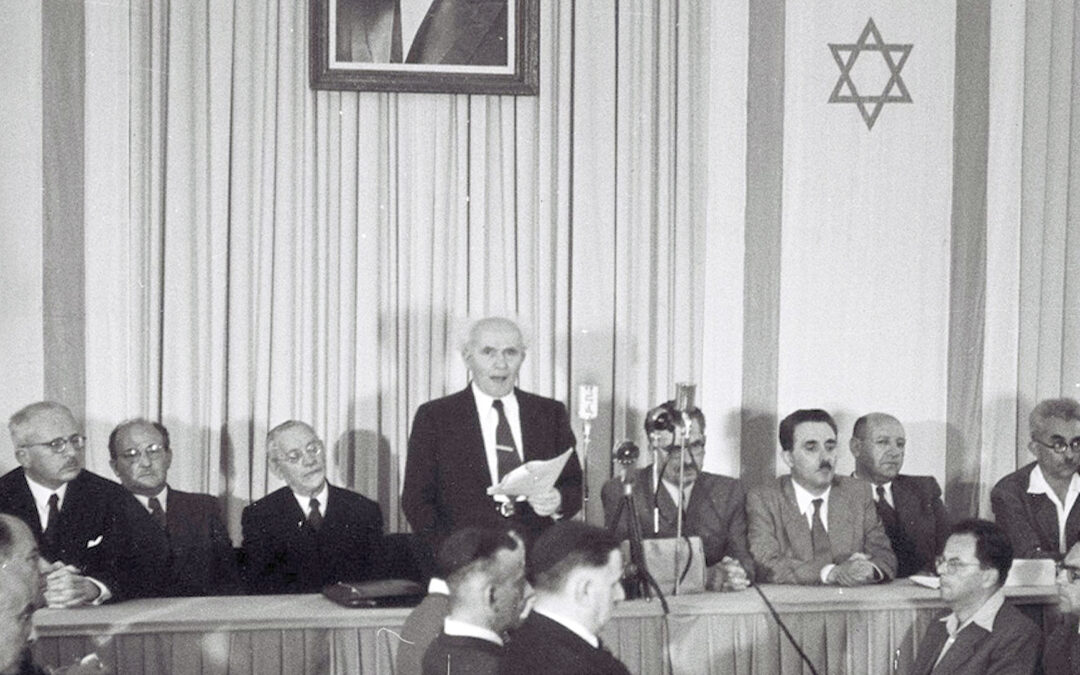
On May 14, 1948, the day the British Mandate expired, the Jewish People’s Council gathered at the Tel Aviv Museum. It approved a proclamation declaring the establishment of a Jewish state in Eretz Yisrael, to be known as the State of Israel. In an official cablegram from the Secretary-General of the League of Arab States to the UN Secretary-General on May 15, 1948, the Arabs stated publicly that various Arab Governments were “compelled to intervene for the sole purpose of restoring peace and security and establishing law and order in Palestine.”
That same day, the armies of Egypt, Lebanon, Syria, Jordan, and Iraq invaded what had ceased to be the British Mandate just the day before. It marked the beginning of the Arab-Israeli War. The newly formed Israel Defense Force repulsed the Arab League nations from part of the occupied territories, thus extending Israel’s borders beyond the original UNSCOP partition. By December 1948, Israel controlled most of that portion of the Mandate, including Palestine west of the Jordan River. The remainder of the Mandate consisted of Jordan, the area that today is called the West Bank (controlled by Jordan), and the Gaza Strip, now controlled by the terrorist organization Hamas.
Prior to and during this conflict, Palestinian Arabs fled their original lands to become Palestinian refugees due, in part, to a promise from Arab leaders that they would be able to return when the war had been won. The war came to an end with the signing of the 1949 Armistice Agreements between Israel and each of its Arab neighbors. Though the open fighting stopped, the hatred never died.