SHAVUOT: The Feast of Pentecost

SHAVUOT: The Feast of Pentecost

Fifty days, or seven weeks, following the Feast of Firstfruits, the Feast of Weeks, Shavuot, or Pentecost was to be celebrated signifying the end of the harvest. Mark Robinson, editor of Israel’s Messenger magazine, identified when the feast was celebrated by the early Jews: “The Sadducees, generally wealthy members of the Jewish aristocracy who had embraced Hellenism, were the Temple custodians. They numbered about 3,000 at the time of Jesus.  According to Josephus, in the 107 years from the beginning of Herod’s reign in 37 B.C. to the fall of Jerusalem in 70 A.D., there were 28 high priests. The Talmud records that by the time of Jesus, the high priest bought the office from the government and the position was changed every year. These policies resulted in a group of wealthy Sadducean priestly families being appointed to the office on a regular basis. They understood the Sabbath to refer to the first Saturday of Passover; thus, the counting was to begin on the first Sunday, always putting Pentecost on a Sunday.  The Pharisees generally came from the middle class, were zealous for the Mosaic Law, and were the “party” of the people. At the time of Jesus they numbered about 6,000.

They interpreted Sabbath not to mean Saturday but the first day of the rest (the first day of the Passover Festival). The counting would begin on the second day of the Passover Festival and Pentecost could fall on any day.  The Pharisees method became the generally accepted method and is used today among the Jewish people.”

The feast was to be a holy convocation. Numbers 28:27–31 gives us a much more comprehensive list of the types of offerings that were to be made: “. . . but offer a burnt offering, with a pleasing aroma to the Lord: two bulls from the herd, one ram, seven male lambs a year old; also their grain offering of fine flour mixed with oil, three tenths of an ephah for each bull, two tenths for one ram, a tenth for each of the seven lambs; with one male goat, to make atonement for you. Besides the regular burnt offering and its grain offering, you shall offer them and their drink offering. See that they are without blemish.”
In the Rose Guide to the Temple, author Randall Price explains the meaning of the celebration: “Fifty days after Passover the Israelites celebrated the Feast of Weeks. This feast is also known as Shavuot, Pentecost, the Feast of Harvest, and the Latter Firstfruits because it was the time to present an offering of new grain of the summer wheat harvest to the Lord, showing joy and thankfulness for the Lord’s blessing of the harvest. It is the second of the three pilgrimages.”

According to the Talmud, it does, however, have another, more spiritual meaning. It was on the day of Pentecost that God gave the Torah to the Jews. It also denoted the commencement of a new season of harvest, Hag HaKatzir or the “Harvest Holiday.” This name was derived from the custom of taking grain to the temple on the feast day.  After Herod’s temple was destroyed in AD 70, the celebration of Shavuot became more connected to the giving of the Torah on Mount Sinai. Because of that association, the Ten Commandments are chanted on that day, and some Jews might spend the entire night studying the Torah.  Passover released the Israelites from physical bondage to Pharaoh; Shavuot is symbolic of the release from spiritual bondage.

Since about the second century, the practice of reading the book of Ruth during the celebration of Shavuot or Pentecost has been adopted. According to Rev. Mark Robinson of Jewish Awareness Ministries, that custom would play a role in the modern-day church. “For the festival of Shavuot the book of Ruth is read in the synagogue telling the glorious story of the love of a Jewish man for a Gentile woman as he followed the God of Israel’s desires. It is no coincidence that at the festival of Shavuot (Pentecost), a Jewish man, Jesus, and ultimately, primarily, a Gentile bride, the church, were brought together, in the birth of the church. This too is a love story of a Jewish man for His Bride!”

For New Testament Believers, the day of Pentecost represents the day on which the Holy Spirit was poured out upon those in the Upper Room who were awaiting His arrival and empowerment. Jesus had alerted His disciples of the happening in Acts 1:4–8: 

“And while staying with them he ordered them not to depart from Jerusalem, but to wait for the promise of the Father, which, he said, ‘you heard from me; for John baptized with water, but you will be baptized with the Holy Spirit not many days from now.’  So when they had come together, they asked him, ‘Lord, will you at this time restore the kingdom to Israel?  He said to them, ‘It is not for you to know times or seasons that the Father has fixed by his own authority. But you will receive power when the Holy Spirit has come upon you, and you will be my witnesses in Jerusalem and in all Judea and Samaria, and to the end of the earth.’”

The prophet Joel had prophesied that the Spirit would come. Joel chapter one outlines the terrible drought and the plagues that had beset the Israelites and decimated the crops. In chapter two, he advised the people what would happen if they came together to worship and honor Jehovah: “And it shall come to pass afterward, that I will pour out my Spirit on all flesh; your sons and your daughters shall prophesy, your old men shall dream dreams, and your young men shall see visions. Even on the male and female servants in those days I will pour out my Spirit” (Joel 2:28–29).

As we read in Acts 2:2–4, fifty days following Christ’s ascension, the disciples were gathered together in a room in Jerusalem: “And suddenly there came from heaven a sound like a mighty rushing wind, and it filled the entire house where they were sitting. And divided tongues as of fire appeared to them and rested on each one of them. And they were all filled with the Holy Spirit and began to speak in other tongues as the Spirit gave them utterance.”

On the day of Pentecost, Peter stood before the assembled multitude and delivered his very first sermon. In Acts 2:40–41, we read of the disciple’s call to repentance: “And with many other words he testified and exhorted them, saying, ‘Be saved from this perverse generation.’ Then those who gladly received his word were baptized; and that day about three thousand souls were added to them.”  It is interesting to note that 3,000 were saved following Peter’s exhortation. Why might that be significant? Let’s look back at the giving of the law on Mount Sinai. After Moses received the Ten Commandments written on stone tablets by the very finger of God, he returned to the camp to deliver them to the people waiting at the base of the mountain.  But what did he find when he descended out of the cloud? 

He found a people reveling in rebellion and delighting in disobedience. Having grown weary of Moses’ absence, the Israelites prevailed upon Aaron, Moses’ brother, to make them a god of gold—a calf. “Come on,” they might have said, “we don’t know what has happened to Moses. We need a god that will lead us out of the wilderness.” The psalmist, David, wrote of those who worshiped other gods. It was a description of idol worshipers of that time, but resonates with similar people of our time: “But their idols are silver and gold, made by human hands. They have mouths, but cannot speak, eyes, but cannot see. They have ears, but cannot hear, noses, but cannot smell. They have hands, but cannot feel, feet, but cannot walk, nor can they utter a sound with their throats. Those who make them will be like them, and so will all who trust in them” (Psalm 115:4–8).

While the people danced before the golden calf, God warned Moses of trouble in the camp and threatened to destroy the people Moses had led out of Egypt. Moses interceded for the rebellious Israelites, and God heeded his plea to spare them. As Joshua and Moses reached the bottom of Mount Sinai, they were stunned by the sight that met their eyes: “When Moses approached the camp and saw the calf and the dancing, his anger burned and he threw the tablets out of his hands, breaking them to pieces at the foot of the mountain. And he took the calf the people had made and burned it in the fire; then he ground it to powder, scattered it on the water and made the Israelites drink it” (Exodus 32:19–20).

Moses must have turned to Aaron and asked, “What were you thinking?!” Aaron’s answer would have won an Oscar for his response and his lame excuse. Can you picture him with arms upraised and a shrug of his shoulders?  “Do not be angry, my lord,” Aaron might have answered. “You know how prone these people are to evil. They said to me, ‘Make us gods who will go before us. As for this fellow Moses who brought us up out of Egypt, we don’t know what has happened to him.’ So I told them, ‘Whoever has any gold jewelry, take it off.’ Then they gave me the gold, and I threw it into the fire, and out came this calf!”

Aaron didn’t bow in contrition and take responsibility for his actions; he tried to justify going along with the crowd.  How often does that still happen…drifting into disobedience instead of taking a stand? We chuckle at Aaron’s disingenuous reply, but haven’t we been guilty of the same? We excuse our own behavior while pointing a finger at someone else’s fall into sin.  So distraught was Moses that he literally drew a line in the sand: “So he stood at the entrance to the camp and shouted, ‘All of you who are on the Lord’s side, come here and join me.’ And all the Levites gathered around him. Moses told them, ‘This is what the Lord, the God of Israel, says: Each of you, take your swords and go back and forth from one end of the camp to the other. Kill everyone—even your brothers, friends, and neighbors.’ The Levites obeyed Moses’ command, and about 3,000 people died that day” (Exodus 32:26–28).

On the day that the Law of Moses was given, 3,000 died because of sin in the camp. After Peter’s sermon on the day of Pentecost, Luke tells us in Acts 2 that 3,000 were saved because of grace.  The day of Pentecost was so much more than tongues of fire and the disciples speaking in other languages. It was a new covenant: the Holy Spirit coming to earth to dwell in God’s people. The prophet Jeremiah spoke to the children of Israel: “But this is the covenant that I will make with the house of Israel after those days, says the Lord: ‘I will put My law in their minds, and write it on their hearts; and I will be their God, and they shall be My people’” (Jeremiah 31:33).  At Sinai, the law was imparted on tablets of stone; in the upper room it was written on hearts of flesh and the people of God were called to be a holy nation and a royal priesthood (see 1 Peter 2:9).

The description of the seven feasts God instructed the Israelites to observe in Leviticus 23 provides a picture of the past, present, and future. The first four feasts—Passover, Unleavened Bread, Firstfruits, and Pentecost—outline events that were fulfilled by Christ during His time on earth. Some Bible scholars believe the Church today is living in time symbolized by the three-month period between Pentecost and Rosh Hashanah, the Feast of Trumpets. In Leviticus 23:22, God defined what was to take place during this time: “When you harvest the crops of your land, do not harvest the grain along the edges of your fields, and do not pick up what the harvesters drop. Leave it for the poor and the foreigners living among you. I am the Lord your God.”

Pastor Iain Gordon provides insight on the deeper meaning of this verse: “You can just take it as general instruction that He cares for the poor and those outside of Israel (which is certainly true) but in that all of this chapter is also prophetic in nature, I believe there is more to this verse than the obvious.  I believe that God has placed this as a sneaky little verse between Pentecost and Trumpets because He was indicating what He was going to do between the fulfillment of these two feasts. As you may remember from the introduction to the feasts study, between the spring and fall feasts there is a gap of over three months. Prophetically, this gap speaks of the Church age that began at Pentecost and will conclude at Trumpets. So what did God do during this time? He did [precisely] what He told Israel to do—He remembered the poor and alien (foreigner/stranger) in sending His word to the far ends of the earth so that the Gentiles could be saved. Now that age still continues today. It is the age of grace and shall continue until the day when trumpet sounds . . . and I believe we are very close to the time for the fulfillment of the Feast of Trumpets to occur.”  


Show Your Support By Giving Now
Happy 78th Birthday, Israel

Happy 78th Birthday, Israel


No people have ever been as plagued, pursued, pressured, and persecuted throughout history than the Jewish people. Many attempts at annihilation have been made, dating all the way back to Pharaoh in Egypt, but none have succeeded. That is because God has made an eternal promise which can never be broken. The Jewish people will always exist. The nation of Israel is the fulfillment of Bible prophecy. No scheme of man or human decree can undo what God has promised. The miraculous rebirth of the Jewish state is the greatest miracle of the modern age.


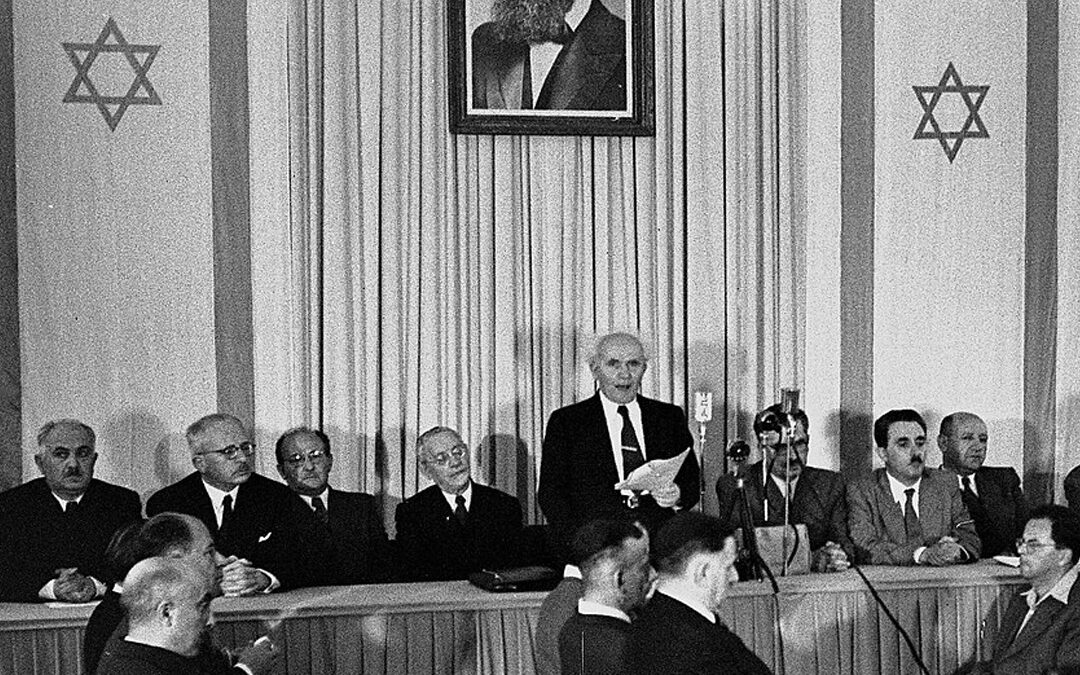
On May 14, 1948, the day on which the British Mandate expired, the Jewish People’s Council gathered at the Tel Aviv Museum and approved a proclamation declaring establishment of a Jewish state in Eretz Yisrael, to be known as the State of Israel. In an official cablegram from the Secretary-General of the League of Arab States to the UN Secretary-General on May 15, 1948, the Arabs stated publicly that various Arab Governments were “compelled to intervene for the sole purpose of restoring peace and security and establishing law and order in Palestine.”


That same day, Arab regular army forces from Egypt, Syria, Lebanon, Jordan, and Iraq joined smaller units from Saudi Arabia and Yemen to fight against the Jewish forces. They were in many cases trained and equipped by the British. Very few countries would have anything to do with support of Israel. One of the few that sold military equipment to the fledgling state was Czechoslovakia. Though they were fighting with antiquated equipment and often against superior numerical opponents, the men and women of the Israel Defense Forces were fighting for more than their lives…they were fighting for their homeland and their people.


The rebirth of Israel was far more than just an unprecedented political event. It was also a long-prophesied spiritual event. More than 2,000 years before Israel was reborn, God came and spoke to the prophet Ezekiel. Ezekiel found himself standing before a valley filled with dry bones…human bones…As the prophet gazed upon the scene, God asked him if these bones could live…to which Ezekiel wisely replied, “O Lord God, YOU know!” What happened then must have been quite a sight to behold.


God told Ezekiel this vision was the future of the House of Israel. Just as these dry, dead bones had been restored to life, so Israel would be restored. God would bring the children of Israel from among the nations in which they had been scattered. He would gather them from the four corners of the earth and restore them into their own land. He did exactly as He promised. Though century after century passed and the cause seemed hopeless, the dream refused to die—both in the hearts of Jewish people and in Bible-believers who understood the prophetic Scriptures.


And when the time was right in May of 1948, the nation of Israel was “born in a day” just as God’s Word had foretold. This month we celebrate Israel’s 78th birthday and renew our commitment to stand with and for the Jewish state and the Jewish people.


Show Your Support By Giving Now
Happy 78th Birthday, Israel

Happy 78th Birthday, Israel


EDITOR’S NOTE:  We are currently in the Jewish year 5786, now more than 78 years since the greatest miracle in modern times, the rebirth of the Jewish state.  The “dry bones” came back to life, just as God had told the prophet Ezekiel they would thousands of years before.  Here is a look back at how this great miracle took place and the cost of seeing Israel become reality.

No people have ever been as plagued, pursued, pressured, and persecuted throughout history as the Jewish people. Many attempts at annihilation have been made, dating all the way back to Pharaoh in Egypt, but none have succeeded. That is because God has made an eternal promise which can never be broken. The Jewish people will always exist. The nation of Israel is the fulfillment of Bible prophecy. No scheme of man or human decree can undo what God has promised.

The Jewish people were conquered and scattered again and again—by the Assyrians, the Babylonians, the Greeks and the Romans, who took Israel captive. Following the destruction of the Temple and one final revolt, the Romans dispersed the Jewish people throughout their empire and forbade them from living in the land of their ancestors. For hundreds of years, the Jewish people roamed the earth with no place to call home. They were discriminated against, persecuted, faced the Inquisition and the pogroms. But all those pale compared to the horror of the Holocaust.

During World War II, Germany’s leader, Adolf Hitler, declared the Jews were not the Chosen People, that the Aryan race was. He determined to resolve what he called the “Jewish problem,” and disseminated the belief that the Jewish people were responsible for anarchy, dishonesty, and the ruin of civilization, government, and finance. History reveals that Adolf Hitler and his “Final Solution” were responsible for the deaths of six million Jewish men, women, and children while the world turned a blind eye to his determination to destroy. This “hide your head in the sand” attitude allowed Hitler room to carry out his plan for mass murder. When the war ended, the tragedy they had suffered made it clear to the world that the Jewish people needed a homeland—a place where they could live and defend themselves. And so the process of establishing a new state of Israel began.

The Rebirth of Israel

Following the defeat of the Ottoman Empire during the First World War, Great Britain took control of the ancient land of Israel and most of the surrounding countries. Under what was known as Mandatory Palestine, the British governed the land.  Despite the earlier declaration by Lord Balfour that the British government supported the creation of a Jewish state, no serious steps were taken to bring that to pass.  Despite that failure, Jewish people from around the world began moving to Israel.

By 1931, seventeen percent of the population of Mandatory Palestine was Jewish, an increase of six percent since 1922.  Immigration would soon peak after the Nazis rose to power in Germany, causing the Jewish population in British Palestine to double.

In the mid-1930s, Izz ad-Din al-Qassam arrived from Syria and established the Black Hand, an anti-Zionist and anti-British militant organization.  He recruited and arranged military training for peasants.  By 1935, al-Qassam had enlisted several hundred men.  The cells were equipped with bombs and firearms used to kill Jewish settlers in the area, as well as engaging in a campaign of vandalism aimed at Jewish settler plantations.  By 1936, escalating tensions led to the 1936-1939 Arab revolt in Palestine.

In response to Arab pressure, British authorities greatly reduced the number of Jewish immigrants to Palestine. Those restrictions remained until the end of the Mandate, a period which coincided with the Nazi Holocaust and attempts by Jewish refugees to escape Hitler’s Europe.  As a consequence, the majority of Jewish entrants to Palestine were considered to be illegal, further increasing tension.

Though the Allies succeeded in defeating Germany in World War II, the long years of fighting took a heavy toll on the British government.  The famed empire on which “the sun never sets” was strained to the breaking point.  The last thing England wanted was another round of fighting in the Middle East.  Having determined that appeasing the Arab governments was more important than anything else, they actively worked to prevent further Jewish immigration to Israel.

In March of 1947, the Exodus set sail for Israel.  Aboard was a Christian Zionist Methodist minister, John Stanley Grauel.  He was closely connected with the Haganah but was there on the ship ostensibly as an undercover correspondent for the Churchman, an Episcopal journal. With that designation, he secured a visa from the British Consulate in Paris, enabling him to legally enter Palestine.  His assignment was to make certain the world knew of the events surrounding the ship.

Once he had arrived in Europe, Grauel’s job was to arrange for the transfer of refugees from displaced persons camps to the Exodus.  His tasks were many and varied—cook, distributor of supplies,  administrator, and contact person between the refugees and the crew.  The ship steamed toward Palestine with more than 4,550 refugees packed aboard. Just as she neared Haifa on the Mediterranean coast, the ship was rammed by the British Royal Navy cruiser Ajax, in a convoy with five destroyers, and was boarded by sailors.

This was not an easy task, as the SS Exodus had been fortified with barriers and barbed wire to discourage such actions.  The British reportedly bombarded the ship with tear gas grenades in order to subdue the passengers.  Captain Ike Aronowicz and his crew challenged the boarding party.  One crew member, First Mate William Bernstein, a sailor from California, and two passengers were bludgeoned to death.

The ship that had brought such hope to so many had been attacked by the British navy a mere 17 miles offshore, in international waters. It was a wanton act of piracy, for which the Royal Navy commanders were never charged. Grauel later reported that as the Exodus staggered into the port at Haifa, those still able to stand gathered on the deck of the ship and sang “Hatikvah,” the hymn of hope.

Grauel, the only passenger onboard with a valid visa, was arrested but soon escaped with help from none other than the future mayor of Jerusalem Teddy Kollek (who would become a very dear friend of mine years later) and the Haganah.  He was approached by a reporter, who was a member of the Jewish organization.

The unnamed reporter shepherded Grauel to the men’s room, from which he was whisked out a back door into a waiting car displaying American press credentials.  The Jews on board the Exodus were then forced to disembark in Haifa and were eventually unwillingly returned to British-controlled camps in Germany.

Grauel was summoned to Kadimah House in Jerusalem to give a first-hand account of his experiences during the voyage with the refugees to the United Nations Committee on Palestine.  As he stood before that group, he leveled his heartfelt accusations regarding the treatment of the Jewish passengers on the Exodus.  He later said of his testimony: “There was great gratification for me in knowing that my eyewitness report was now a matter of record.  Inherent in the nature of the relationship between Christians and Jews was the fact that because I was a Christian, in this situation my testimony would be given greater credence than that of a Jewish crew member.”

Grauel’s witness proved to be an effective means of gaining compassion and support for the Jewish cause.  His eloquent speech to the UNSCOP later earned him the moniker of “the man who helped make Israel possible.” Prime Minister Golda Meir believed it was Grauel’s recounting of the events surrounding the Exodus that persuaded the UN to support the creation of a Jewish state.

After five weeks of study in Palestine, the UNSCOP group returned to the General Assembly in September 1947 with a report containing both a majority and a minority plan.  The majority proposed a Plan of Partition with Economic Union; the minority proposed an Independent State of Palestine.  With only slight modifications, the Plan of Economic Union was recommended and came up for a vote on November 29, 1947.

The vote was contentious, and the outcome was far from certain.  Supporters of a new Jewish state, including U.S. President Harry Truman, used every diplomatic tool available to encourage nations that were on the fence to vote for the resolution and to encourage those that would not vote for the plan to abstain from voting.  When the vote was held, the Resolution carried by 33 votes to 13 with 10 abstentions and the groundwork for the rebirth of Israel was laid.

As expected, the Arab states, which constituted the Arab League, that had voted against the resolution refused to accept it.  It was clear to everyone that war would follow.  At the time, Arab and Jewish Palestinians fought openly to control strategic positions in the region.  In the weeks prior to the end of the Mandate, the Haganah (the clandestine military wing of the Jewish leadership that became the basis for the Israeli Defense Force) launched a number of offensives to gain control over all the territory allocated to the Jewish state by the UN, capturing the towns of Tiberias, Haifa, Safad, Beisan and, in effect, Jaffa.

Early in 1948, the United Kingdom announced it would terminate the Mandate in Palestine ahead of schedule—on May 14.  In response, President Harry S Truman proposed UN trusteeship rather than partition, stating that “unfortunately, it has become clear that the partition plan cannot be carried out at this time by peaceful means.”  Further, he commented that “…unless emergency action is taken, there will be no public authority in Palestine on that date capable of preserving law and order.  Violence and bloodshed will descend upon the Holy Land.  Large-scale fighting among the people of that country will be the inevitable result.”

On May 14, 1948, the day on which the British Mandate expired, the Jewish People’s Council gathered at the Tel Aviv Museum and approved a proclamation declaring the establishment of a Jewish state in Eretz Yisrael, to be known as the State of Israel.  In an official cablegram from the Secretary-General of the League of Arab States to the UN Secretary-General on May 15, 1948, the Arabs stated publicly that various Arab governments were “compelled to intervene for the sole purpose of restoring peace and security and establishing law and order in Palestine.”

That same day, Arab regular army forces from Egypt, Syria, Lebanon, Jordan, and Iraq joined smaller units from Saudi Arabia and Yemen to fight against the Jewish forces.  They were in many cases, trained and equipped by the British.  Very few countries would have anything to do with support of Israel.  One of the few that sold military equipment to the fledgling state was Czechoslovakia.  Though they were fighting with antiquated equipment and often against superior numerical opponents, the men and women of the Israel Defense Forces were fighting for more than their lives; they were fighting for their homeland and their people.

In addition, the fledgling Israeli army was strengthened by thousands of volunteers from around the world, many of them Christians who joined the fight, often against the wishes of their own governments. These men, known in Israel as the Machal (Volunteers from Outside the Land of Israel) risked and, in many cases, gave their lives so that the Jewish state could live.  Most of these volunteers were veterans of the Second World War, and their assistance and experience were invaluable to the Jewish forces.

When the war broke out, many intelligence experts, including the CIA and the British Foreign Ministry, expected that the Arabs would eventually win.  But such evaluations did not take into account either the spirit of the IDF or the divine blessing that strengthened their hands for war.  That initial campaign lasted nearly a year with Israel emerging victorious, but at a very high price.

By December 1948, Israel controlled most of that portion of the Mandate including Palestine west of the Jordan River.  The remainder of the Mandate consisted of Jordan, the area that today is called the West Bank (controlled by Jordan), and the Gaza Strip, now controlled by the Palestinian Authority and the terrorist organization, Hamas. Prior to and during this conflict, 713,000 Palestinian Arabs fled their original lands to become Palestinian refugees due, in part, to a promise from Arab leaders that they would be able to return when the war had been won.  The war came to an end with the signing of the 1949 Armistice Agreements between Israel and each of its Arab neighbors.

The rebirth of Israel was far more than just an unprecedented political event.  It was also a long-prophesied spiritual event.  More than 2,000 years before Israel was reborn, God came and spoke to the prophet Ezekiel.  Ezekiel found himself standing before a valley filled with dry bones…human bones.  As the prophet  gazed upon the scene, God asked him if these bones could live, to which Ezekiel wisely replied, “O Lord God, YOU know!” (Ezekiel 37:3).  What happened then must have been quite a sight to behold.

God told Ezekiel to speak to the bones and command them to live.  The prophet wrote: “So I prophesied as I was commanded.  And as I was prophesying, there was a noise, a rattling sound, and the bones came together, bone to bone.  I looked and tendons and flesh appeared on them and skin covered them…Then He said to me, ‘…These are the people of Israel…My people.  I am going to open your graves and bring you up from them; I will bring you back to the land of Israel’” (Ezekiel 37:7-12).

God told Ezekiel this vision was the future of the House of Israel.  Just as these dry, dead bones had been restored to life, so Israel would be restored.  God would bring the children of Israel from among the nations in which they had been scattered.  He would gather them from the four corners of the earth and restore them to their own land.  He did exactly as He promised.  Though century after century passed and the cause seemed hopeless, the dream refused to die, both in the hearts of Jewish people and in Bible-believers who understood the prophetic Scriptures. 

And when the time was right—in May of 1948—the nation of Israel was “born in a day,” just as God’s Word had foretold. 


Show Your Support By Giving Now
Dream Fuel: Suffering & Sacrifice

Dream Fuel: Suffering & Sacrifice

Do you want to be a victim or a victor? Do you want to be comfortable or a conqueror? Do you want to see “impossible” dreams come true, to the glory of God?  Jesus is coming back as the King of kings. If you want to be a king, you’re going to have to be willing to commit yourself to sacrifice and suffering. Kings process pain and pleasure differently than other people.The Bible says Jesus “learned obedience by the things which He suffered” (Hebrews 5:8).Scripture adds, “And after you have suffered a little while, the God of all grace, who has called you to his eternal glory in Christ, will himself restore, confirm, strengthen, and establish you” (1 Peter 5:10).

The apostle Paul said, “For this light momentary affliction is preparing for us an eternal weight of glory, beyond all comprehension” (2 Corinthians 4:17).  In his cell in chains, he looked at his own death sentence and suffering for Christ and said, “I can do all things through Christ who strengthens me” (Philippians 4:13).

When you’re lied about and betrayed, and you forgive and remain silent rather than attempt to destroy the person who is slandering you, you still love them and suffer for Christ’s sake. The price of admission to change the world is unspeakable evil and betrayal, and when it comes, you cannot play the victim.

Are the things you’re living for worth Christ dying for? Are you willing to live your life in the light of eternity? The apostle Paul said that he wanted to know Christ and the fellowship of His suffering. If you truly want to change the world, then celebrate suffering and sacrifice. Seek the Jesus who shows up in the flames of fire.

It is in the quiet crucible of your personal suffering that your noblest dreams are born. God’s greatest gifts are given in compensation for what you’ve been through. You’re going to be betrayed. You’re going to be rejected by those you’ve loved the most if you choose the narrow path.  How much rejection and pain and disappointment can you tolerate before you turn your back on the Savior? Beginning strong is not a sign of a surrendered life. Finishing strong is.

When things are going well, we see Christ as a conquering Savior. But when things go badly, do you still see Him that way? To be an overcomer, you must have something to overcome. If you don’t have an opponent, you don’t have a victory.  Most who celebrate with you on the mountain will not be with you in the fire. Everyone wants a theology that celebrates those who get fire protection. How about a theology that celebrates those who choose to suffer in the fire and embraces a God who walks through the fire with us?

In one week the crowds went from celebrating the Savior with their Hosannas to despising and rejecting Him. As the prophet Isaiah said, they hid their faces from Him.  Jesus never hid suffering from His followers. He told them that if you follow Me you’re going to have to take up My cross. The cross was a curse word. It was a symbol of shame. The Jesus I have found is more powerful in your suffering than in your celebrations. Sometimes He stills the storms, but most of the time He stills us in the midst of the storms. His word to you and me and this generation is the same: Take up My cross and follow Me.

Revelations born from suffering for Christ are the engines of God that fuel His eternal purposes on earth. It will cause you to see what He sees, hear what He hears, and do what He does.  The Christian life is not about winning and being number one. It’s about Jesus being number one. If I must protect my name at all costs, my reputation at all costs, my career at all costs, my income at all costs, and my influence at all costs, it will lead to a self-inspired narrative (S.I.N.).

The Christian life is about surrendering all of our life for His glory and His story. That’s what I have learned about God’s dreams and how they come to pass.  Sacrifice and suffering can fuel your dreams if you let them.


Show Your Support By Giving Now
‘THE PRINCE OF PERSIA’: HISTORY, FAITH, AND A WARNING THE WEST IGNORED – OPINION

‘THE PRINCE OF PERSIA’: HISTORY, FAITH, AND A WARNING THE WEST IGNORED – OPINION

The greatest uprising since the Iranian Revolution of January 1979 is happening right now. It looks like a scene from the movie Braveheart, when Scotland cried “Freedom” during the First War of Scottish Independence against King Edward of England, led by Sir William Wallace.

Evangelical Bible believers see it as a battle between principalities and powers. “For we wrestle not against flesh and blood, but against principalities and powers, against the world rulers of this darkness, against spiritual hosts of wickedness in the heavenly places” (Ephesians 6:12).

They see a similar battle that happened in Persia during Daniel’s day in the Bible, against a demon spirit called the Prince of Persia, described in the Book of Daniel, chapter 10, a demonic spiritual force opposing God’s purpose. It was a cosmic battle of spiritual warfare in which the angel Michael, the guardian angel of Israel, battled demonic forces.

Farah Pahlavi, Empress of Iran, held my book, Jimmy Carter, the Liberal Left, and World Chaos, in her hands in her home in Georgetown twenty-six years ago. The book documented president Jimmy Carter’s plan to overthrow the Shah of Iran.

She said, “It is absolutely true what you’ve written. He came to Tehran on New Year’s 1977 and told the King, ‘You will release political prisoners, give freedom of the press and freedom of religion, and you will allow Khomeini to come back. If you don’t, you will not get replacement parts for your helicopters and planes. I have the authority to do this under a human rights provision.’”

“When he left, my husband said, ‘If I agree, the Russians will invade Afghanistan, Iraq will attack Iran, an Islamic Revolution will be born in Iran, and who knows what horror will come upon the earth.’” She said, “Carter believed that Khomeini would be great for human rights because he was a cleric and could become a Gandhi-like figure.”

The day before my meeting with Farah Pahlavi, I met in the home of General Robert Huyser, former Deputy Commander-in-Chief of European Command and Jimmy Carter’s special emissary to Iran. He told me he was sent to Tehran to foment a military coup. Huyser’s job was to inform the generals that Carter was in favor of democracy in Iran and to persuade the military leaders to remain in Iran and work with the United States, assuring them that the US would protect them.

Huyser, with tears running down his face, told me in his home, “They all died because of me. They could have saved the country from the revolution, but Carter would not let them. They died believing in us.” Of the eighty top generals, more than seventy were tortured and executed, along with hundreds of lower-ranking officers. Almost seventy-five percent of the senior officers were killed.

‘Carter had abandoned an ally’

I flew to France and met with President Valéry Giscard d’Estaing. He told me something similar. “President Carter called for a meeting on the French island of Guadeloupe in the Caribbean with the leaders of Britain, France, and West Germany. The United States had decided not to support the regime of the Shah and was working to overthrow him.” He said “Carter had abandoned an ally.”

Khomeini became the VIP darling of the Western media. France had become a command center for the launch of the Islamic Revolution. Khomeini gave over one hundred media interviews during his four-month stay in Neauphle-le-Château, France, and hosted over one thousand Iranian visitors a day. Two of Khomeini’s visitors were Farouk Kaddoumi, PLO department head, and a Libyan representative of Muammar al-Qaddafi.

His compound was surrounded by representatives of covert agencies from the major powers: the CIA, British MI6, Russian KGB, and the French intelligence organization SDECE. I later found out that funds were also being sent to Khomeini from the United States while he was in France to help him overthrow the Shah.

On September 23, 1980, I was in the home of Isser Harel, founder of Israeli intelligence Mossad, in Tel Aviv. I asked him three questions. First: “Do you think Jimmy Carter will win the election against Ronald Reagan?” Carter was ahead in the polls. Harel said, “The Iranians will have something to say about that. When Ronald Reagan puts his hand on the Bible, the hostages will be released.”

I then asked him what would happen to Sadat. He said, “We have saved his life several times, but at an opportune time, the Muslim Brotherhood will kill him.”

My third question was whether terrorism would ever come to America. He said, “The terrorists have the power but not the will. You have the will but not the power. All of that can change in time. You kill a fly and rejoice. We kill one, and a hundred come to the funeral. Your first terrorist attack will be in New York City, your tallest building.”

The deadlock between the United States and Iran seemed insurmountable until January 15, 1981. Just days before Carter was to leave office, Iran agreed to the terms. US bank officials worked marathon sessions. New documents were drawn up, and the Bank of England was approved as the repository of the escrow funds. Shortly after 4:00 a.m. on Inauguration Day, January 20, 1981, the Carter administration relinquished $7.977 billion to the Iranians. The transfer required fourteen banks and the participation of five nations acting concurrently.

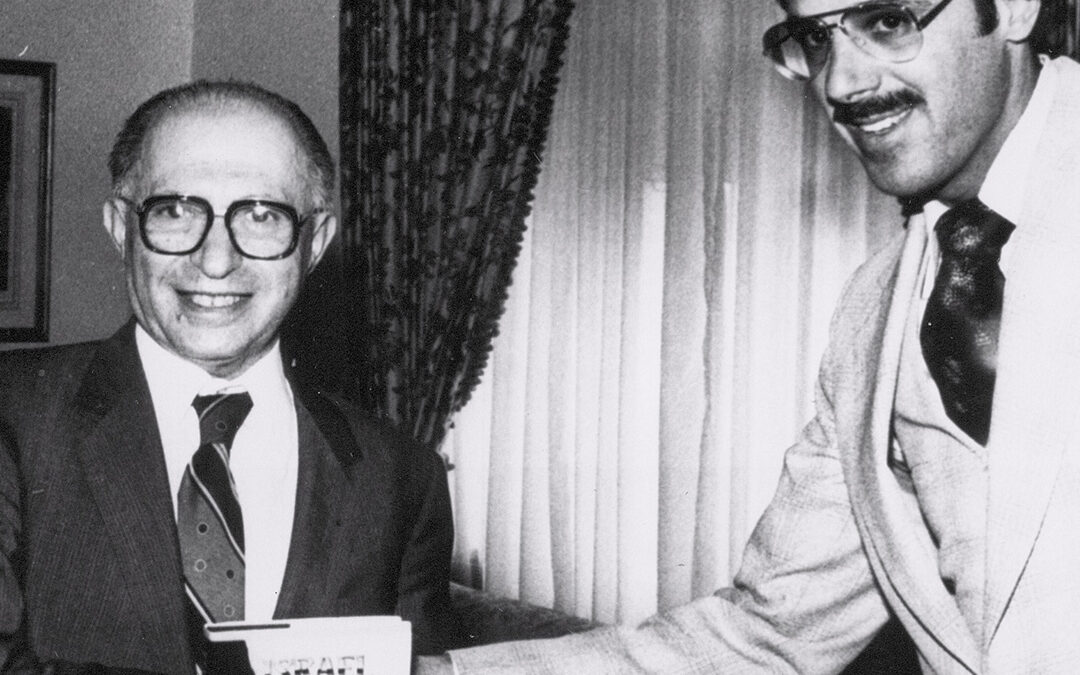
As I watched Ronald Reagan place his hand on the Bible to be sworn in, a news flash announced that the hostages were being released. My phone rang. It was the senior advisor to Prime Minister Begin, Dr. Reuben Hecht, who had been in the meeting with me and Isser Harel. He said, “Harel is a prophet. It’s happening exactly as he said.”

Mike Evans is a New York Times #1 bestselling author of 119 published books and a Nobel Peace Prize nominee. He is the founder of the Friends of Zion Heritage Center and recently led an initiative that brought 1,000 evangelical pastors to Israel to combat antisemitism.


Show Your Support By Giving Now
Courage and Faith in Action

Courage and Faith in Action

She was just an ordinary girl.  Esther had no famous or well-connected relatives.  In fact, she and her people were living as a minority in a foreign land where they had been taken by a conquering enemy army; yet, today her name is synonymous with faith and courage.  The short book that bears her name tells a story of divine deliverance—a message that is very much relevant to our day when once again a plot has been hatched in Persia to destroy the Jewish people.

Esther became queen of the Persian Empire without the king or anyone in authority knowing that she was Jewish.  This was on the wise advice of her guardian Mordecai, who instructed her to hide her ancestry for the sake of her future.  Not long after Esther became queen, an evil man in a high government position named Haman, motivated by his hatred of Mordecai (who refused to bow before Haman because he would only bow before God), devised a scheme to destroy the Jewish people.

Haman presented the king with a distorted picture of God’s Chosen People.  He falsely accused them of disobeying the laws of the Persian Empire and suggested that destroying them would promote order and stability throughout the realm.  To further sweeten the deal, Haman offered to pay a large sum of money to the royal treasury to cover the expenses of exterminating the Jewish people.  The king went along with the plan, setting a date for the destruction of the Jewish exiles living in the 127 provinces that made up his kingdom.

When Mordecai received this news, he began fasting in sackcloth and ashes, along with Jewish people throughout the Persian realm.  There seemed to be no hope for them, but God was at work behind the scenes.  Mordecai sent word to Esther that the time to reveal her heritage had come and that she should use her position as queen to plead for the Jewish people to be spared.

When she pointed out that entering the king’s presence without an invitation was a capital offense, Mordecai made his famous declaration that God had put Esther where she was “for such a time as this.”  Esther courageously went before the king, and God granted her favor in his eyes, and he spared her life.

Esther asked the king and Haman to come to a private meeting.  Then she asked them to return a second time, and finally revealed to the king the evil that he had unknowingly agreed to support.  The king’s wrath was kindled against Haman, and he ordered the evil plotter to be hung on the very gallows that Haman had constructed to have Mordecai executed on—and provided the Jewish people the opportunity for self defense.  The Jewish people were spared from destruction.  Even to this day, this wonderful miracle of deliverance is celebrated as the Feast of Purim.  Esther remains a wonderful example of what we can do when we fully rely on God.

As I read this story again recently, I was struck by something that doesn’t often receive a great deal of attention.  Esther did not face her moment of crisis alone.  Here was her response:  Spiritual battles are not meant to be fought alone.  Before Esther entered the king’s presence, risking her life to plead for her people, there was a massive campaign of prayer and fasting on her behalf.  The deliverance of Israel depended on the power of God, and the people of God sought His face and His help together.  That is a perfect description of the work of the Jerusalem Prayer Team. 


Show Your Support By Giving Now
The Jerusalem Prayer Team with Dr. Michael D. Evans exists to build Friends of Zion to guard defend and protect the Jewish people and to pray for the peace of Jerusalem. We pray for peace in Jerusalem because the Scriptures tell us to in Psalm 122:6. The Jerusalem Prayer Team was inspired from the 100-year long prayer meeting for the restoration of Israel held in the ten Boom family home in Haarlem, Holland. We are committed to encouraging others to pray for the peace of Jerusalem and God's Chosen People. Jerusalem Prayer Team members are also members of Churches United with Israel, Corrie Ten Boom House, Friends of Zion Heritage Center and Jerusalem World News. The Jerusalem Prayer Team mailing address is PO BOX 30000 Phoenix, AZ 85046 or you can call us at 1-888-966-8472. The Jerusalem Prayer Team is a dba of the Corrie ten Boom Fellowship. The Corrie ten Boom Fellowship is a non-profit 501(c)(3) charitable organization and is registered with the IRS, Fed Tax ID# 75-2671293. All donations to CTBF (less the value of any products or services received) are tax-deductible as allowed by law. Donations made to the Jerusalem Prayer Team are put to work immediately and are not refundable.